


For example, if a company’s revenue is twice as large as its average total assets, its asset turnover ratio would be 2.0. Accumulated depreciation is a contra asset account representing the aggregate of depreciation expensed as of a specific date. The purpose of presenting accumulated depreciation is to show the net value of fixed assets.
- For instance, retail companies often have higher ratios due to lower asset bases, while manufacturing firms may have lower ratios because of significant investments in fixed assets.
- Real estate or procurement teams should notify accounting when fixed assets are purchased.
- Many organizations would not exist or generate revenue without their property, plant, and equipment.
- Users, visitors, and customers can use all our products, software, programs, services, content, and information at their own risk, and 100% responsibility lies on them.
- If you wanted to investigate Company BB as a potential stock investment, you could use the assets turnover ratio to get a better sense of how well the company is using its assets to create sales.
- Asset turnover may be less useful for companies with minimal physical assets, such as service or software-based businesses, where intangible assets are more significant.
📊 The DuPont Model (Also known as 3-Step Breakdown of ROE)
Asset turnover measures how efficiently a company uses its assets to generate revenue. This financial ratio tells you whether a business is squeezing maximum value from every dollar invested in equipment, inventory, and other resources. The Asset Turnover Ratio is a performance measure used to understand the efficiency of a company in using its assets to generate revenue. It measures how effectively a company is managing its assets to produce sales and is a key indicator of operational efficiency. A higher ratio suggests that the company is using its assets more effectively to generate revenue.
Stock Market Crashes in History
Non-operating assets do not directly relate to operations but still contribute to revenue generation. Examples include investments or the land and building where an organization’s headquarters is located. Financial ratio analysis is used by a company’s external and internal stakeholders to assess financial health. External users include investors, equity research analysts, lenders, and creditors. Internal users, on the other hand, comprise management and corporate finance teams.
Don’t Get Fooled by Numbers: How to Spot Red Flags in a Company’s Balance Sheet

The units of the production method of depreciation are based on the number of actual units produced by the asset in a period. This method makes sense for an asset that depreciates from usage rather than time. Depending on the condition and expected salvage value of the asset, it may be sold for more or less than its carrying value. Since our database is so vast, sometimes it may be difficult to find what you need. Balancing off Accounts If we discover we don’t have what you need, our research team will work on incorporating the missing KPIs.
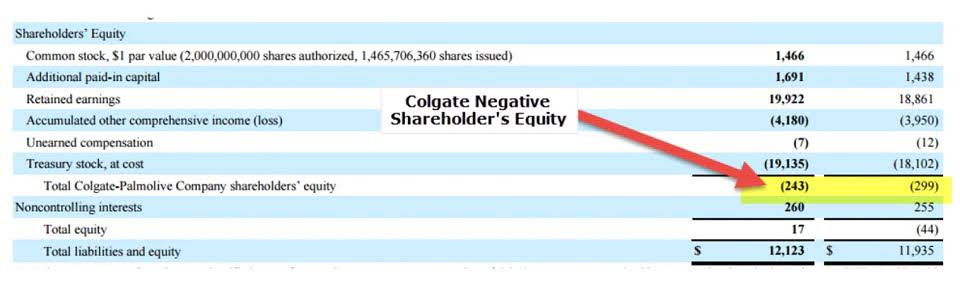
- This article will teach you how to calculate asset turnover, how to use it to make better investing decisions, and where it falls short in providing an analysis.
- We’re talking about things like buildings, machinery, equipment, land, vehicles, and even significant software investments.
- Investments in new technologies can enhance operational efficiency, leading to better asset utilization and an improved asset turnover ratio.
- For example, a manufacturing company will probably have significant amounts of machinery and equipment as those are key to the primary business operations in that industry.
Long-term assets are the remaining items that can’t be replaced with cash within one year. High downtime can lead to significant financial losses, impacting both revenue generation and customer satisfaction. By closely monitoring this metric, organizations can identify bottlenecks and implement corrective actions. Capacity Utilization Rate (CUR) serves as a critical KPI for assessing operational efficiency and resource allocation. By tracking these KPIs, https://moonlighthosiery.com.pk/cost-reduction-definition-process-and-techniques/ companies can pinpoint underperforming assets, enabling targeted interventions to improve utilization rates, which in turn reduces idle time and increases productivity.
This ratio is especially beneficial in asset-intensive businesses like manufacturing and retail. This includes automating manual processes, training staff, and adopting lean management principles to eliminate waste, all contributing to higher sales without a corresponding increase in assets. Some industries tend to achieve higher ROEs than others, and therefore, ROE is most useful when comparing companies within the same industry. Cyclical industries tend to generate higher ROEs than defensive industries, which is due to asset turnover formula the different risk characteristics attributable to them.
The asset turnover ratio doesn’t tell you everything you need to know about a company. Importantly, its focus on net sales means that it eschews the profitability of those sales. As such, asset turnover may be better utilized in conjunction with profitability ratios. Once you have numbers for total sales and average assets, divide the former by the latter to get the asset turnover ratio.

In the galaxy of financial metrics, the significance of Asset Turnover shines bright. It’s an invaluable compass for gauging the efficiency of a company’s use of its assets to stir up sales. This ratio is a partner-in-crime to profitability ratios, providing a nuanced view of revenue generation efforts. Crucially, it reveals how adept a company is at utilizing its resources—a high asset turnover indicates efficient use of assets to generate sales for the fiscal year in review. Moreover, it offers a snapshot of a company’s operational health, laying bare potential issues that could be silently eroding profitability, such as poor inventory management or lackluster production processes. For those assessing a company’s financial performance during a fiscal year, understanding and tracking this ratio stands paramount.

Best Low-Cost Operational Robo 2027
Understanding the asset turnover ratio meaning and its implications helps stakeholders evaluate a company’s operational efficiency and make informed decisions regarding its financial health. If the net profit margin increases over time, then the firm is managing its operating and financial expenses well and the ROE should also increase over time. If the asset turnover increases, the firm is utilizing its assets efficiently, generating more sales per dollar of assets owned.
Remember, OSCTOTAL/S, or total outstanding customer sales, is a critical factor in determining how efficiently a company is using its assets to generate revenue. Keeping OSCTOTAL/S in check is essential for maintaining healthy cash flow, improving asset turnover, and ensuring long-term financial stability. While the total asset turnover ratio provides insights into asset efficiency, it doesn’t account for factors like profitability or cost management. Additionally, variations in asset valuation methods and seasonal sales fluctuations can influence the ratio, so it should be used in conjunction with other financial metrics for a comprehensive analysis. The ‘Beginning Fixed Assets’ refers to the net book value of your fixed assets at the very start of the accounting period (e.g., January 1st for a calendar year). The ‘Ending Fixed Assets’ is the net book value at the very end of that period (e.g., December 31st).